

How to Write a Strong Research Paper Abstract That Gets Accepted
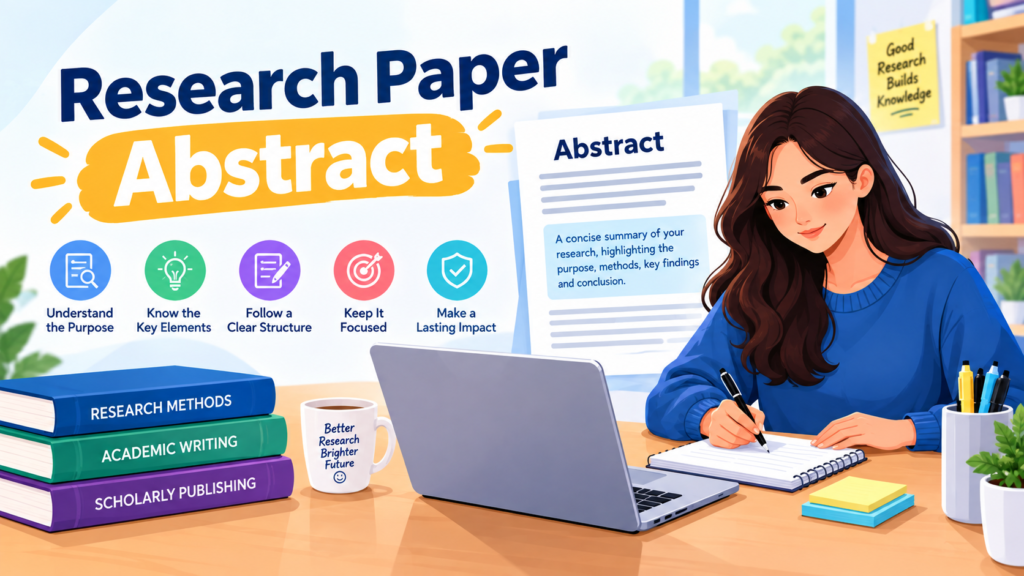
The abstract for a research paper is the first impression that you make of an academic research paper. Often, the editors of a journal make a decision as soon as they have read the abstract. If the abstract is weak, it could limit the chances of getting it published right away.
A lot of scientists have issues with structuring and clarity in their abstracts when publishing in journals, so they opt for journal publication services. And others spend weeks in the abstract process before submission.
The abstract should be clear and concise about the purpose and methods of the study, its results, and its conclusions. It should be brief but convey the key information of the research.
This writing guide tells you the steps on how to write an effective abstract step by step. You’ll also discover some of the common errors, formatting guidelines, and techniques.
Understanding the research paper abstract
The abstract of a research paper is a brief part that summarizes the entire research. Provides a quick summary of research.
Several abstracts are presented at the start of an academic paper, the vast majority of the time. They are frequently read by editors and reviewers prior to the review of the full paper.
A good abstract will clarify to the reader that:
- Research purpose
- Study methods
- Key findings
- Main conclusion
Keep the abstract concise and to the point. Try to exclude any extra words of explanation and background.
A lot of researchers who are associated with the writing process for journal paper writing services pay considerable attention to enhancing the readability of their abstract before submission.
The relevance of Abstracts in the Academic Writing
Journal editors get thousands of submissions yearly. The abstract assists them in gauging the relevance to research in a short time.
A good abstract will improve the likelihood of peer review. It’s also good for SEO as far as databases and search engines are concerned.
Scanning of abstracts happens before reading full papers. Summaries that are clear and concise receive more academic citations and attention.
Abstract quality is crucial to the journal publication house process as well. Abstracts that are poorly written can cause problems with research value.
Good abstracts have a positive impact on building credibility and communicating.
The Basic Components of a Strong Abstract
All good abstracts have a number of key parts. Each of these is used to provide structure and to aid comprehension.
Research Problem
State the major problem clearly and unambiguously. Readers need to be able to tell at a glance what this study is about.
Example:
This study aims to explore the challenges of remote learning for university students.
Research Objective
State the aim of the study straightforwardly.
Example:
The study explores students’ engagement in online classes.
Research Methods
Summarize methods. Specify surveys, interviews, experiments, or analysis techniques.
Key Findings
Effectively communicate the most salient findings.
Conclusion
Describe the findings of a study and its implications.
Good abstracts are logical, coherent, and complete.
Kinds of research paper abstracts
There are various styles of writing an abstract, depending on the journal to which you are submitting your article. Researchers must pay careful attention to the guidelines of the journal they are researching.
Descriptive Abstract
This type is limited to describing the topic of the study, but does not provide any specifics of the study. It is still concise and vague.
Informative Abstract
An informative abstract contains objectives, methods, results, and conclusions. This is the most preferred format for most journals.
Structured Abstract
The information is broken up into sections in structured abstracts, such as:
- Background
- Methods
- Results
- Conclusion
This is the structure that is adopted in medical or scientific journals.
Journal publication houses typically review the formatting of the journal article very carefully.
How To Write A Strong Research Paper Abstract?
An effective abstract is a well-thought-out and precise piece of writing. Researchers are encouraged to be brief and succinct in their papers.
Write after finishing the Paper
Write the abstract last when writing the research paper. This will increase the consistency and accuracy.
The complete paper will include details about:
- Objectives
- Findings
- Research significance
Keep It Concise
Typically, most journals will require 150 – 250 words. Do not repeat explanations and/or ideas.
Avoid using elaborate language and sentences. Communication is improved, and the text is easier to read.
Clear Academic Language
Try to keep the discussions away from the technical jargon where possible. The abstract will be available for reading by readers from other fields.
Using simple academic language helps to make it easier to understand and accessible.
Focus on Important Findings
Only present those things that are most significant. Don’t provide all the information about the research.
Readers do not want an entire discussion; they want to be given a summary.
Correlate the Paper Content items
Make sure that the abstract is representative of the whole paper. Don’t present new arguments and new findings.
It helps to build consistency, which builds trust and professionalism.
The common mistakes that can decrease acceptance odds
Avoidable mistakes in the writing of many abstracts are to blame. Researchers are advised to carefully read the abstracts before submitting them for research.
Writing Long Introductions
Excessive background information is used by some researchers. This makes the focus less on findings and methods.
Using Vague Statements
The lack of a strong statement will lead to confusion.
Poor example:
“This study addresses pertinent topics”.
Better example:
“This research is about the impact of social media on students’ focus”.
Ignoring Journal Guidelines
Requirements for word limits and required format vary from journal to journal. Failure to follow directions will result in rejection.
Adding Unnecessary Citations
Generally, references and/or citations should not be included in most abstracts.
Including Undefined Abbreviations
Shortened terms may not be readily understood by the reader. Always clarify abbreviations if they could be necessary.
Scientists involved in the system of journal publication usually put a lot of effort into abstracts, which are often revised multiple times before submission to the journal.
A few tips to improve the quality of abstracts
Abstracts need editing and revision to have strong abstracts. A number of small changes can help produce a good publication.
Use Active Voice
Active sentences are useful to improve clarity and readability.
Weak:
The survey was carried out by a research team.
Better:
A survey was carried out by the researchers.
Remove Unnecessary Words
Keeping sentences brief increases the reader’s interest.
Instead of:
“Says that it is important to note that…”
Write:
“The study shows…”
Check Grammar Carefully
Immediately Professionalism is diminished when you make grammatical errors. Apply proofreading techniques or peer editing.
Include Important Keywords
Keywords increase the visibility of a database and search efficiency.
Read aloud the Abstract
Read and listen to sentences to detect awkward sentences/phrasing.
A strong abstract
A real illustration is used to aid researchers in understanding the appropriate structure.
Example
“This study provides a sample of 300 university students in the United States who were surveyed during the 2024 academic year and discovered that students taking classes online were less engaged in the classroom and more stressed than those taking face-to-face classes. The results indicate that universities need to enhance ways of interacting with students digitally and support students of all classes in this process”.
The following example is brief, straightforward, and informative.
How Journal Reviewers Evaluate Abstracts
The screening process involves reviewing abstracts in a rapid manner by the reviewers. A well-organized presentation makes a big impact on a first impression.
Reviewers usually check:
- Research clarity
- Method accuracy
- Result relevance
- Writing quality
- Topic originality
Often, journal publication houses have a technical screening before the beginning of the peer review process. The editors also determine if there is a match in the scope of the journal and academic standards.
Conclusion
A well-written research paper abstract enables the researchers to clearly communicate their work professionally. It can often be a deciding factor whether or not editors go on with the paper.
Good abstracts are succinct explanations of the objectives, methods, findings, and conclusions. Academic credibility is enhanced by a clear structure and readability.
Researchers must not use general language, too many details, or incorrect formatting. Don’t overlook the importance of revision to enhance clarity and impact.
Researchers can, with good planning and editing, develop abstracts that can increase publication potential and generate academic interest.
Frequent Ask Questions (FAQs)
What is an Abstract of a research paper?
A research paper abstract aims to provide a concise summary of the research. Describes the purpose, methods, findings, and conclusions.
Why is it important to have an abstract?
The abstract is an initial impression to editors and reviewers. It also promotes the visibility of research in databases.
What is the optimum length of an abstract?
The mean length of the abstracts is 150-250 words. Care should be taken to write research according to the guidelines of the journals.
Do abstracts need to contain citations to other sources of information?
Generally, journal articles do not include citations within the abstract. Abstracts should be brief and to the point.
Are poor abstracts grounds to be rejected?
Yes. Abstracts that aren’t strong enough could mislead editors or affect the credibility of the research in the review process.