

Enhancing Research Reliability Through Digital Labs
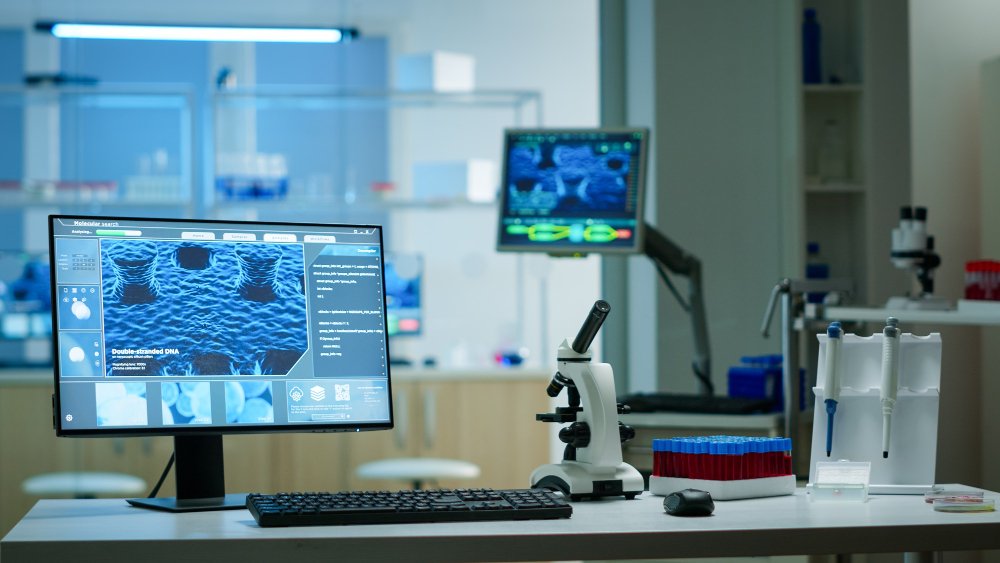
Digital labs in research are crucial in increasing reproducibility and reliability. These laboratories manage the workflow, systematize the data, and automate the repetitive processes with the help of the latest technologies, which reduce errors and variability. Electronic lab notebooks enable researchers to record experiments in an accurate and consistent way across experiments. Secure data sharing and collaboration is also made possible by digital labs, where multiple teams can reproduce and verify results effectively.
These labs also simplify the process of meeting regulatory requirements and research, in addition to enhancing accuracy. Consequently, digital labs have turned out to be the necessary component of the contemporary scientific research, which has become more transparent, efficient, and innovative.
Integrating Technology to achieve Consistency
Variability is one of the primary issues of research. Digital labs solve this by standardizing and capturing structured data. All the steps are recorded by the researchers in electronic lab notebooks, which minimizes the issue of errors and ensures accuracy. The strategy also assists in compliance with rules and audit standards. These methods increase the trustworthiness of the findings of the experiments.
Structured Data Capture and Its Advantages.
Labs can organize information through structured data capture. All measurement, observation and experiment notes are recorded in a standard format. This method minimizes human error and guarantees reproducibility. Researchers are able to trace the changes, compare the results and detect inconsistencies effectively. Automated analysis and workflow optimization is based on structured data.
Workflow Automation to be Reliable
Digital labs are automated and this eliminates repetitive work, increasing speed and accuracy. Automation can be done in tasks such as sample handling, measurements and data entry. This saves time as well as minimizes the chances of variability due to manual intervention. Researchers are able to concentrate on analysis and interpretation, which improves innovation.
R&D Digital Lab Infrastructure
High-tech infrastructure facilitates reproducibility, by combining hardware and software. Connected devices, cloud storage and secure data sharing solutions are an advantage of labs. Such an arrangement will enable various teams to access and verify data without any challenge and will collaborate and encourage collaboration and transparency among research projects.
Integrated Systems to ensure smooth operations
Digital laboratories are based on interlinked devices and systems. Devices are able to communicate automatically minimizing manual input and errors. Experiments can be tracked by teams in real time. This integration also guarantees that workflow is effective and the outcomes are predictable.
Cloud Solutions and Secure Data Storage
Digital labs store data safely in cloud platforms. Experiments can be accessed remotely by authorized personnel using cloud storage. It eliminates loss of data and makes sure that research is regularly backed up.
Teamwork Tools to Work Efficiently
The infrastructure has collaboration tools that allow different teams to collaborate. Centralized data and shared dashboards enable researchers to validate findings in a short time. Transparency enhances interdepartmental reproducibility.
The use of Electronic Lab Notebooks
Electronic lab notebooks (ELNs) are a hub of documentation of experiments. They offer such features as Data linking, version control and audit trails. ELNs make it possible to collaborate in real-time and guarantee that the research is properly documented, which allows reproducibility between the teams and institutions.
Favoring Collaboration and Data Sharing
Digital Labs enhance collaboration, which enables data sharing in a safe way. Easy exchange of datasets, reproduction of experiments, and verification of findings can be made easy by researchers. Transparency is a culture that is encouraged through open communication and availability of data thus is vital to credible and reproducible research.
Environmental and Cost Benefits
Digital labs minimize wasted resources by standardizing processes and minimizing errors. Laboratories conserve materials, energy, and time, which make them more sustainable. Also, reproducible research saves on repetition of experiments, which would save a lot of money.
Reducing Material Waste
Digital labs standardize processes, reducing the consumption of unneeded materials. Proper measurements and automated processes minimize repetition of experiments. This reduces the environmental impact of research.
Energy and Time Saving
Structured data and automation save time on repetitive work. Energy saving through efficient workflows is achieved through optimization of equipment. Labs are able to invest in innovation instead of correcting mistakes.
Cost-Effective Research Practices
Labs save on operational costs by eliminating repetition of experiments and minimizing errors. Repeatable workflows result in predictable results, which simplify and enhance the budgeting process.
Enhancing Research Compliance and Integrity
Electronic tools aid in adherence to regulatory measures. Reproducibility guarantees that the results of the research are of good quality and the records are well-documented in a manner that can be audited. This compliance not only protects the laboratory in legal terms, but also increases scientific credibility.
Standardization of Risk Reduction
Standardized protocols minimize the chances of errors and inconsistencies. Formalized processes reduce the chances of invalid outcomes and enhance reliability.
The Digital Lab Training Role
The introduction of digital labs will necessitate the training of researchers on new tools and protocols. Frequent workshops and resources assist teams to adjust to digital systems effectively. The benefits of automation, structured data, and electronic documentation are maximized by trained personnel to ensure that the lab is able to deliver reproducible results.
Reproducible Research and Journals
The researchers can use the journal paper writing service to integrate reproducible data practices in the manuscripts. These services help in the organization of findings, reference and experimental information to be of publication standard which is an indicator of transparency and reliability.
Publishing High-Quality Research
Researchers who utilize journal paper writing services are able to integrate reproducible data practices in manuscripts. Such services help to arrange findings, references, and experimental data to the standards of publication, which is an expression of transparency and reliability.
Best Practices in the Implementation of Digital Labs
Design and Evaluate Requirements
Assess your research needs and then proceed to digital lab. Find workflows, data types, and collaboration needs. With proper planning, there is no integration hitches and resources are not wasted.
Effectively Train Research Teams
Train all the team members about new tools and protocols. Frequent workshops and instructions would be done to make sure that researchers operate digital systems properly and that research has maximum reproducibility.
Integrate Incrementally
Begin by digitizing major processes instead of the whole lab simultaneously. The gradual implementation assists the staff to get used to it, minimizes disruption, and minimizes resistance to change.
Measure and Control
Monitor the important indicators such as error rates, time to complete the experiment, and quality of data. Continuously use insights to improve workflows and increase reproducibility.
Encourage a Culture of Transparency
Encourage open documentation, data sharing, and peer review in the lab. Openness promotes cooperation and trust in research findings.
Optimizing the use and uptake of Digital Labs
Advantages of Collaborating with a Respected Publisher
The guidelines of reproducibility are directed by a competent journal publication house. Cooperation with these organizations will ensure that the research is carried out according to the best practices, improve dissemination, and credibility in the long term. They are able to utilize their resources to enable submission and publication.
Digital Lab Trends in the Future
The reproducibility will be further improved with the help of emerging technologies, including AI-driven analysis, advanced robotics, and cloud-based collaboration. The future of reproducible research is predictive analytics and automated monitoring systems that assist in predicting errors, automating workflows, and ensuring consistency across experiments.
Digital Labs in Action Case Studies
A number of institutions have managed to adopt digital labs to enhance the reliability of research. They minimized variability in experiments and enhanced the rate of replication by implementing structured data capture, ELNs, and automated workflows. These instances show that digital transformation is not a choice but a necessity to quality research.
Addressing the Digital Lab Adoption Challenges
Although there are advantages, the introduction of digital labs can be hampered by challenges such as upfront cost, change resistance, or technical complexity. These difficulties can be overcome through proper planning, training, and gradual integration, which will enable labs to enjoy long-term benefits in reproducibility and efficiency.
Digital Labs Impact Measurement
The most important metrics are lower error rates, quicker experiment completion, and better data traceability. Monitoring these indicators proves the practical value of digital labs, which can assist institutions to justify investments and encourage their use among research teams.
Collaboration Across Disciplines
Digital laboratories guarantee interdisciplinary research by making the data available and standardized. The tests that are carried out by various scientists are reproducible, combinable, and cooperative, which promotes the development of innovation and rapid discovery.
Conclusion
Digital labs are critical in providing reproducible research. Laboratories are able to deliver concurring outcomes and promote scientific credibility through structured data, automation, electronic documentation and collaboration tools. By collaborating with a journal publication house and relying on the supporting services, these advantages are magnified so reproducibility has become a norm in contemporary research.
A digital lab is a technology that automates and records research to ensure accuracy.
It makes experiments reproducible, which enhances credibility and efficiency.
There are initial costs, but they are compensated by savings in the form of fewer mistakes and quicker workflows.
Yes, they offer common access to data, allowing cross-team and interdisciplinary research.
Yes, documented records and audit trails assist in fulfilling regulatory needs.