

How Graduate Students in Taiwan Are Using Scopus AI to Improve Research
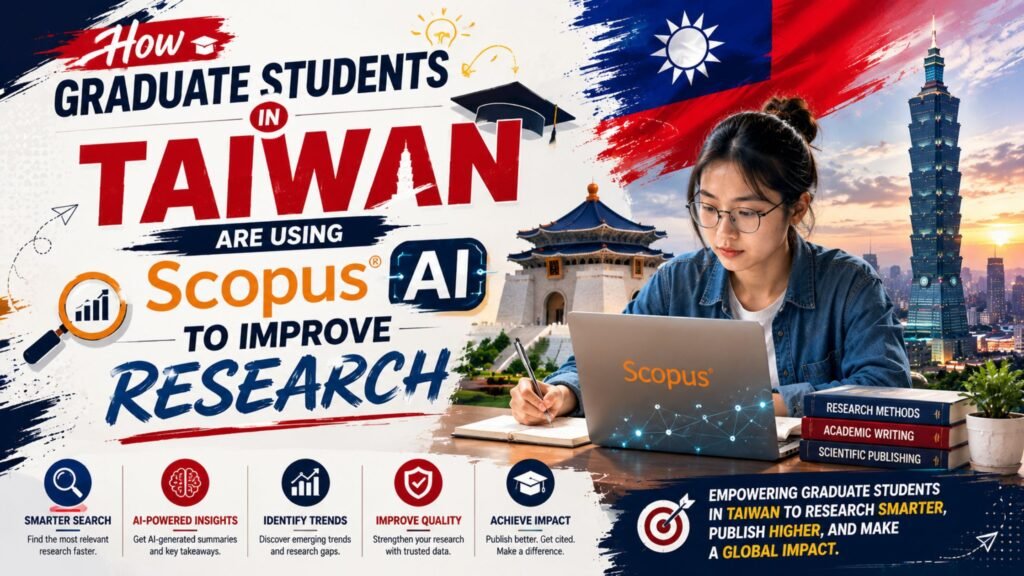
Scopus AI transforms the approach of graduate students in Taiwan to academic research. Students are now able to efficiently search, analyze, and organize literature using smart tools. Research quality and internationalization are expected in Taiwan’s graduate students. AI-driven platforms assist students in achieving these goals more quickly. They sharpen their research questions, enhance their methodology, and improve the structure of their writing.
Some learners also seek journal paper writing services for final language polishing. Numerous universities have actively supported the responsible use of AI. This transformation results in more confident and productive researchers. The integration of technology and critical thinking enriches students’ academic bases in Taiwan.
How Scopus AI Supports Graduate Research in Taiwan
Scopus AI enables graduate students in Taiwan to access major academic databases directly. They know how to find gaps in the research, locate citations, and analyse trends effectively. This ability enhances each step in the research process. Students no longer have to do weeks of manual searches. Instead, they concentrate on analysis and writing. The universities in Taiwan have acknowledged this change, and they are promoting the use of responsible AI tools in their graduate programs.
Streamlining the Literature Review Process
Any good thesis is built upon literature reviews. Scopus AI enables students to streamline the organization of vast and extensive academic content. It automatically clusters studies together that share common themes.
Students can easily name important authors and papers. This helps to minimize distractions and focus. Some benefits of Scopus AI for literature reviews are:
- The identification of relevant peer-reviewed sources is quicker.
- Studies clearly organised into research themes.
- Methods and findings easily compared.
- Tracking citations in important academic publications.
- Identification of new trends in certain fields of study
Refining Research Questions and Topics
A lot of graduate students start with general and unrefined research questions. With real data trends, Scopus AI can narrow those ideas. It points out unexploited fields in particular subjects. Students find new perspectives that professors and reviewers appreciate. This insight will help with original contributions and better proposals.
Students in Taiwan test keyword combinations also rapidly. They switch their attention according to the amount of literature available. This is a process that can be repeated and enhances clarity and academic direction greatly.
Strengthening Methodology Design
To select the appropriate research method, it is necessary to know the various methods that have been used before. Scopus AI outlines methodologies used in similar studies clearly. Students make comparisons between qualitative and quantitative methods. They explore samples, tools, and approaches. This review provides confidence in design decisions.
In Taiwan, supervisors value students who have organized evidence to present at meetings. Those discussions are productive and focused with AI insights. Clear method selection also minimizes the number of revisions in the thesis writing process.
Improving Academic Writing and Submission Readiness
Scopus AI is helping graduate students to enhance their academic writing. Structured arguments can be smoothly incorporated with verified references. Students develop better first drafts before getting feedback from outside. Many also use journal paper writing services to help them refine their language. But AI tools assist students with cleaner drafts on their own. This practice develops, over time, confidence in writing. Good drafts minimize editing time and boost manuscript quality before submission to any academic journal or publisher.
Preparing Manuscripts for Journal Submission
Scopus AI assists students in finding the appropriate journals for submitting their work. They research the scope, indexing status, and previously published topics of the journals. There is a correlation between manuscripts and specific publication expectations in this research. Learners also see common reviewers’ patterns of feedback on similar papers.
They edit their drafts in advance of submission. Some students refer to a journal publication house for suggestions on formatting and submission procedures. They use the AI tools to narrow down their list of journals first. This can save time and help to align research content with the focus areas of the journals.
Ensuring Citation Accuracy and Integrity
Citations ensure academic integrity. Scopus AI monitors citation networks and automatically validates influential sources. Learners can easily check references without errors in manual tracking. Citations are thoroughly checked on Taiwan’s institutions. AI helps minimize frequent reference list errors.
Students double-check all citations before submission. Citation mapping also shows the impact of research in a particular field. Students recognise what studies inform their discipline and situate their claims. This awareness enhances scholarly contribution and reviewer confidence.
Supporting Collaboration and Research Networking
Scopus AI helps students identify active researchers worldwide and in Taiwan. They investigate the patterns of co-authorship and inter-disciplinary relationships. Taiwan actively encourages cross-border research exchange programmes. Students analyze data to determine possible collaborators. They make informed and organised proposals to researchers.
Student participation in conferences with increased awareness of research and goals. By participating in international cooperation, Taiwan’s research activities improve the overall visibility and academic status of Taiwan in indexed international publications.
Discovering Interdisciplinary Research Opportunities
Graduate students are frequently engaged in confined academic fields. With Scopus AI, the relationships between the various fields are easily displayed. Students are informed of complementary studies that augment research. This cross-field awareness promotes innovative thinking. In Taiwan, interdisciplinary research is encouraged in academia.
Students can contribute more original works when they explore beyond their major field of study. They also have a broader audience after being published. Interdisciplinary research is often a critical asset to a graduate researcher’s research journey when it comes to submitting and indexing to a journal publication house.
Addressing Ethical Use and Academic Responsibility
Ethics is essential in using AI research tools. Students will be held responsible for thoroughly reviewing all information created by AI. It is a must to read original articles before citing. Blind faith in automation is a possibility for research errors. The Taiwanese universities have clear guidelines for the responsible use of AI.
Students attend workshops relating to good research practice. Balanced use of tools is encouraged among all Professors. While AI tools can be efficient, they should not be used to replace critical thinking. The rule of responsible adoption and a high standard of academic integrity in graduate research.
Overcoming Common Challenges in AI-Assisted Research
While the advantages are apparent, there are some problems for graduate students. Over-automated systems decrease analytical depth. Students need to challenge all summaries and check important points. Some users have limitations due to language barriers. Good academic English understanding is required for advanced AI.
Vocabulary and interpretation are practiced regularly. Subscription databases may also be different at different universities. It is required to have equal research infrastructure in institutions. All graduate students have consistent access to smart research tools.
Long-Term Impact on Research Productivity and Career Growth
Measurable improvement in the research output of Taiwan’s universities. Students will be able to complete their literature review earlier and present their proposals earlier. The manuscripts are more evident in terms of evidence and structure (as noted by faculty members). Over time, when the subject is peer reviewed, feedback is more constructive and positive. Smart research platforms are impacting long-term academic careers early in the process.
The students learn efficient working processes which enable Doctoral and Postdoctoral studies. The better the students submit manuscripts written with clarity and cleanliness, the better the journal publication services will be. In the new landscape of research in Taiwan, students must be digitally literate.
Building Independent Research Confidence
This means that Scopus AI can be used responsibly by graduate students, promoting strong independence. They become “guided” to “strategic” researchers. They set new research directions based on actual data analysis. This expansion is indicative of sound and judicious scholarship. Students deliver information more effectively.
When students submit well-structured and polished manuscripts, they are more likely to be able to write them for a journal publication house. Graduate students in Taiwan build these skills, bolstering the academic community. The use of intelligent tools over a long period ensures the quality of research, visibility, and impact in the academic world globally.
Conclusion
Scopus AI continues to transform Taiwan’s graduate studies. Students use it to enhance their questions and help them locate literature and develop better methods. They are more confident in preparing manuscripts and submitting them to appropriate journals. Academic honesty is maintained through the ethical and fair use of tools.
There are three parties involved in the responsible use of tools at university: universities, supervisors, and students. This careful approach will improve the quality of the research and its impact. Smart technology integration and critical human judgment and discipline build up the strength of Taiwan’s graduate research community.
Frequent Ask Questions (FAQs)
What makes Scopus AI useful for graduate students in Taiwan?
Scopus AI offers students access to millions of peer-reviewed articles in a fast manner. It helps them identify areas of research, track citations, and to refine ideas efficiently. This will save a lot of time during literature research.
Does using AI tools compromise academic integrity in research?
No; however, students need to check all AI-generated summaries with sources. Clear ethical guidelines for responsible use are given by universities in Taiwan. Research is always conducted critically.
Can Scopus AI help students choose the right journal for submission?
Yes, journal scope and indexing are taught on the site. They match their manuscripts to the published work. This will go a long way to increase the acceptance rate.
Is Scopus AI suitable for all academic disciplines in Taiwan?
Yes, it’s a place where you can find articles in different academic fields and on different topics. It is an honor for students from all scientific, humanistic, and social studies disciplines. It’s effective at encouraging research and finding interdisciplinary knowledge.